
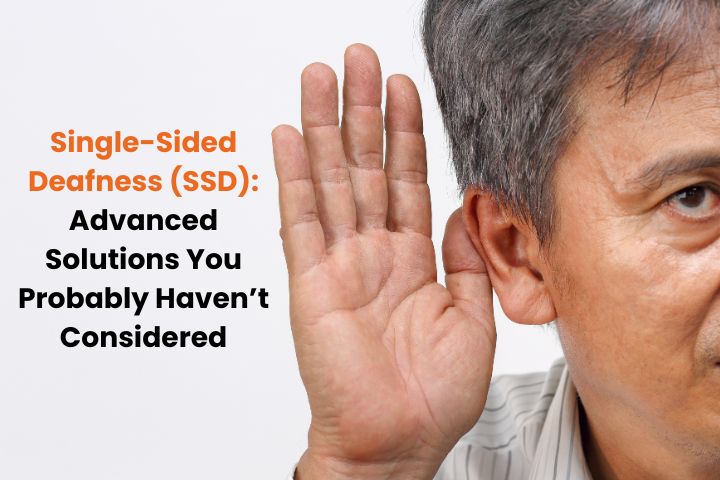
Single-Sided Deafness (SSD): Advanced Solutions You To Consider
When a person loses hearing in only one ear, life can change in ways that most people don’t expect. Single-Sided Deafness (SSD), also known as unilateral hearing loss, affects thousands of people every year — often suddenly and without warning. Unlike typical hearing loss where both ears are affected, SSD creates unique challenges, from difficulty locating sounds to struggling with conversations in noisy environments. Yet despite these daily challenges, countless individuals don’t know that effective solutions for SSD exist.
In India — especially in large metro cities like Chennai — awareness around Single-Sided Deafness remains surprisingly low. Many people assume that if one ear becomes completely deaf, nothing can be done. But modern audiology has evolved far beyond this misconception. Today, advanced technologies like CROS hearing aids, bone conduction hearing devices, and even cochlear implants for SSD can dramatically improve a person’s hearing experience.
This blog breaks down everything you need to know about SSD: what it is, why it happens, how it impacts your life, and most importantly, the advanced solutions for SSD you may not have considered until now.
What Is Single-Sided Deafness (SSD)?
Single-Sided Deafness (SSD) refers to a condition where one ear has severe-to-profound sensorineural hearing loss, while the other ear hears normally or near-normally. SSD can be permanent or sudden, and it may develop over hours, days, or gradually over years.
People often search online for questions like:
- “What causes sudden hearing loss in one ear?”
- “Why do I hear ringing in one ear but no pain?”
- “Is there any treatment for hearing loss in one ear?”
The short answer is: yes, there are treatments — but timely diagnosis is essential.
Common Causes of Single-Sided Deafness
There are many reasons why someone can develop hearing loss in one ear, including:
1. Sudden Sensorineural Hearing Loss (SSNHL)
This is one of the most common causes, often described as “waking up suddenly unable to hear in one ear.” It may be accompanied by ringing (tinnitus), dizziness, or a feeling of fullness in the ear. SSNHL is a medical emergency — treatment within 48–72 hours offers the best chance of recovery.
2. Viral or Bacterial Ear Infections
Infections can damage the delicate inner-ear structures, leading to permanent SSD.
3. Acoustic Neuroma (Vestibular Schwannoma)
A benign tumour that affects hearing and balance nerves.
4. Meniere’s Disease
A chronic inner-ear disorder causing fluctuating hearing loss, vertigo, and tinnitus.
5. Trauma or Injury
A blow to the head, sudden pressure changes, or acoustic trauma can cause SSD.
6. Ototoxic Medications
Certain medicines damage the hearing nerve, sometimes affecting only one ear.
Regardless of the cause, SSD is more than just hearing loss — it affects how the brain processes sound. That’s why hearing loss treatment becomes crucial.
How SSD Affects Daily Life (More Than People Realize)
Most people assume “one good ear is enough.” But the reality is different.
1. Difficulty Locating Sounds
The brain uses both ears to determine the direction of a sound. With SSD, localisation becomes difficult, affecting safety (especially while crossing roads or driving).
2. Struggling in Background Noise
Restaurants, offices, social gatherings — all become overwhelming. The “head shadow effect” blocks high-frequency sounds, which are essential for understanding speech.
3. Listening Fatigue
Because the good ear works twice as hard, people with SSD often experience tiredness, irritability, and headaches.
4. Social Withdrawal
Missing parts of conversations leads to embarrassment, isolation, or participating less in group settings.
5. Emotional Impact
SSD can cause frustration, anxiety, and in some cases, depression — especially when tinnitus is present.
6. Safety Concerns
Not hearing vehicles, alarms, or someone calling your name can be dangerous.
This is why seeking solutions for SSD is not optional — it’s essential for quality of life.
Modern Solutions for Single-Sided Deafness (SSD)
(The section that will attract maximum SEO traffic)
Most people with SSD think “nothing can be done” because traditional hearing aids don’t work for a severely damaged ear. But today’s advanced technology bypasses this limitation completely.
Below are the three most effective and scientifically proven SSD treatment options available worldwide — and all of them are available in India.
1. CROS & BiCROS Hearing Aids – The Most Popular SSD Solution
If you’ve never heard of them, you’re not alone — but they are powerful.
What are CROS Hearing Aids?
CROS stands for Contralateral Routing of Signal. These devices send sound from the deaf ear to the better ear.
How They Work:
- A microphone sits on the deaf ear.
- It captures sounds from that side.
- Sound is wirelessly transmitted to a receiver in the good ear.
- The brain gets input from both sides, improving clarity and balance.
Benefits of CROS Hearing Aids:
- No surgery required
- Very small and discreet
- Great for hearing in crowded places
- Reduces listening fatigue
- Restores awareness of the deaf side
If the “good ear” also has mild hearing loss, audiologists recommend BiCROS, which amplifies sound while also routing signals from the deaf ear.
Why They’re Ideal:
✔ Best non-surgical solution for SSD
✔ Ideal for people with sudden hearing loss in one ear
✔ Works for all age groups
CROS hearing aids are one of the highest-searched keywords because they offer immediate improvement.
2. Bone Conduction Hearing Devices (BAHA, Bonebridge)
Bone conduction hearing devices are another advanced option, especially for those who cannot use CROS devices.
How They Work:
Instead of sending sound through the air, these devices send vibrations through the skull bone directly to the good inner ear.
This bypasses:
- The damaged ear canal
- The middle ear
- The non-functioning cochlea
Two Types:
- Surgical devices like BAHA or Bonebridge
- Non-surgical softband devices
Benefits:
- Excellent clarity in outdoor environments
- Strong performance in windy conditions
- Great for people with chronic ear infections
- More natural sound quality for some users
Bone conduction devices are also searched heavily by patients researching hearing loss treatment and alternatives to hearing aids.
3. Cochlear Implant for SSD – A Game-Changer
Most people believe cochlear implants are only for people who are fully deaf in both ears. But modern medicine has changed this.
Today, cochlear implants for SSD are approved globally — and they offer the most natural restoration of binaural hearing.
How Cochlear Implants Work:
- They bypass the damaged cochlea.
- Directly stimulate the hearing nerve.
- Provide real hearing input from the previously deaf ear.
Benefits:
- Improved speech clarity in noise
- Accurate sound localisation
- Significant reduction in tinnitus
- Helps children develop normal speech and language
- Offers long-term stable hearing
For people searching for “how to regain hearing in one deaf ear”, cochlear implants are often the best solution.
Other Assistive Technologies That Help SSD
Even with the main devices above, these add-ons improve real-world hearing:
- Remote microphones in classrooms and offices
- TV streamers for clearer dialogue
- Smartphone apps for noise reduction
- Bluetooth accessories that sync with CROS or cochlear implants
These tools make everyday life easier and support overall hearing health.
Choosing the Right SSD Treatment — What You Should Know
Not every option suits every patient. Choosing the best solutions for SSD depends on:
- Cause of hearing loss
- Time since sudden hearing loss
- Presence of tinnitus
- Health of the better ear
- Lifestyle and communication needs
- Age (children vs adults)
- Speech clarity scores
A proper hearing evaluation is essential. Many people wait months or years — and this delay affects outcomes.
If you’re in Tamil Nadu, getting a hearing test in Chennai from a well-equipped centre is the ideal first step.
Single-Sided Deafness in Children — Why Early Treatment Is Critical
Children with SSD face unique challenges:
- Trouble locating where the teacher’s voice comes from
- Struggles in classrooms
- Delayed speech development
- Difficulty learning language
- Behavioural issues from constant listening fatigue
Early detection and rehabilitation (using CROS, bone conduction, or cochlear implants) significantly improves school performance and communication.
Parents searching for “early signs of hearing issues in children” often discover SSD too late. Timely testing is key.
Living with SSD — You Don’t Need to Struggle Silently
The biggest myth about Single-Sided Deafness is that “nothing can be done.” Today, that is no longer true. Whether your SSD is due to sudden hearing loss, infection, nerve damage, or unknown causes, modern audiology gives you multiple paths to regain clarity, balance, and confidence.
With advanced solutions like:
- CROS hearing aids
- Bone conduction hearing devices
- Cochlear implant for SSD
…SSD is completely manageable.
If you’re in Chennai, you have access to one of India’s most advanced audiology networks.
Looking for SSD Solutions in Chennai? Visit Eljay Hearing Centre
For 49+ years, Eljay Hearing Centre has been one of the most trusted hearing aid centres in Chennai, specializing in:
- Comprehensive diagnostic testing
- Treatment for SSD and sudden hearing loss
- CROS & BiCROS fittings
- Bone conduction devices
- Cochlear implant counselling
- Advanced digital hearing aids
- Tinnitus care
- Paediatric and adult audiology
With 8 branches across Chennai, highly experienced audiologists, and ENT specialists, Eljay helps patients rediscover the joy of sound every day.
Visit your nearest Eljay Hearing Centre in:
- Purasawalkam (Head Office): A1, 1st Floor, Garden Apartments, No.68, Purasawalkam High Road, Chennai – 600007
- Adyar: No.75, Dhanalakshmi Ave, near Nalli Silks, Kasturba Nagar, Chennai – 600020
- Alwarpet: G-2, Sir Usman Court, No.63, Eldams Road, Opp. Punjab National Bank, Chennai – 600018
- Ambattur: No.426/469, MM Tower, MTH Road, Opp. Rakki Cinemas, Behind Axis Bank, Chennai – 600053
- Nanganallur: No.14, 2nd Main Road, Ram Nagar, Near Anjaneyar Temple, Opp. Sidney Hospital, Chennai – 600061
- Tambaram (West): No.21, Duraisamy Reddy Street, Next to Passport Office, Chennai – 600045
- Velachery: No.26/15, Sai Ram Complex, 100-ft Road, next to Dr. Batra’s, Vijaya Nagar, Chennai – 600042
- Tondiarpet: No.71, O.No, 15/1, Kummalamman Koil St, opp. to KVT Maaligai, Sanjeevarayanpet, Tondiarpet, Chennai, Tamil Nadu 600081
 Book a consultation today: appointment.eljayhearing.com
👉 If you or your loved one is struggling with hearing loss in one ear, book a hearing test today.
Early intervention makes all the difference.