
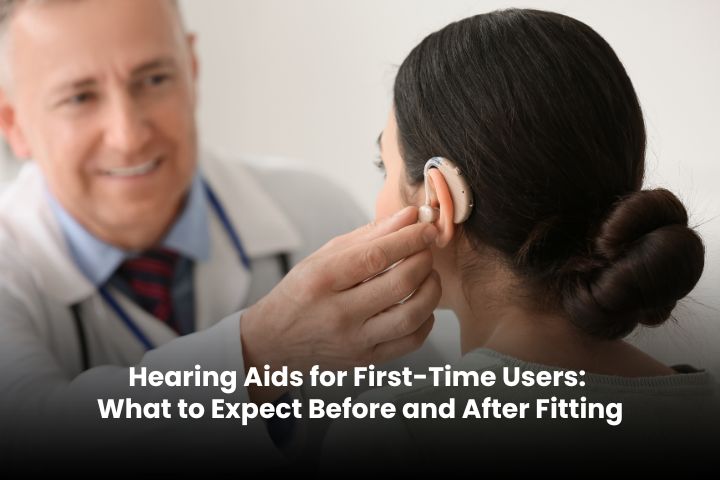
Hearing Aids for First-Time Users: What to Expect Before and After Fitting
Introduction
Deciding to get hearing aids for the first time can bring a mix of excitement, questions and uncertainty.
You may have noticed that conversations are becoming harder to follow, people frequently ask whether you can hear them, or you find yourself increasing the television volume more often. Perhaps family members have suggested getting your hearing checked, or an audiologist has already recommended hearing aids.
Whatever has brought you to this stage, one thing is certain: getting hearing aids for the first time is a learning process, and knowing what to expect can make the experience much easier.
Modern hearing aids are designed to do much more than simply make sounds louder. They can be programmed according to your hearing requirements, help improve speech audibility and offer features that support different listening environments.
However, choosing the right hearing aid involves more than selecting a device based on its appearance, brand or price. Your hearing test results, lifestyle, communication needs and professional recommendations all play an important role.
At Eljay Hearing Centre, with 50 years of expertise and 8 branches across Chennai, first-time hearing aid users can receive guidance on hearing evaluations, device selection, fitting, programming and ongoing support.
In this guide, we explain everything you should know before getting your first hearing aids, what happens during the fitting process, how to adjust to wearing them and how to make the most of your new devices.
1. How Do You Know If You Need Hearing Aids?
One of the biggest misconceptions about hearing aids is that they are needed only when someone can barely hear.
In reality, hearing aids may be recommended for people with mild, moderate or more significant hearing loss, depending on their hearing test results and communication needs.
You may benefit from a hearing evaluation if you regularly experience:
- Asking people to repeat themselves during conversations.
- Struggling to understand speech in crowded places.
- Increasing the volume of the television or phone.
- Finding phone conversations difficult.
- Missing parts of conversations, especially when people speak softly.
- Feeling that people are mumbling even when they are speaking clearly.
- Difficulty following group discussions.
- Frequently misunderstanding words.
- Ringing or buzzing sounds in the ears alongside hearing difficulties.
- Avoiding social situations because conversations have become frustrating.
These symptoms do not automatically mean you need hearing aids. However, they are good reasons to get your hearing assessed.
A professional hearing test can determine whether hearing loss is present, identify its type and degree, and help establish whether hearing aids may be suitable.
Read more: How to Know If You Have Hearing Loss.
2. What Should You Do Before Buying Your First Hearing Aids?
Before purchasing hearing aids, it is important to understand your hearing requirements.
Choosing a device without a proper hearing evaluation can lead to an unsuitable fit, incorrect amplification or disappointing results.
Here are the important steps to follow.
Step 1: Get a Professional Hearing Test
The first step is to get a comprehensive hearing assessment.
A hearing test helps identify:
- Whether you have hearing loss.
- The degree of hearing loss.
- Whether the loss is present in one or both ears.
- Which sound frequencies are affected.
- Whether the hearing loss is conductive, sensorineural or mixed.
Depending on your symptoms, an audiologist may recommend tests such as pure tone audiometry, speech audiometry and tympanometry.
The results are generally recorded in an audiogram, which helps the hearing professional understand your hearing profile.
Step 2: Discuss Your Lifestyle and Listening Needs
Two people with similar hearing test results may have very different hearing aid requirements.
For example:
- Someone who works in an office may need help following meetings and conversations.
- A senior citizen may prioritise comfortable everyday listening and conversations with family.
- Someone who frequently attends social gatherings may benefit from features designed to support listening in noisy environments.
- A person who spends a lot of time on phone calls may prefer suitable Bluetooth connectivity.
Tell your audiologist about the situations in which you find hearing most difficult.
This helps them recommend hearing aids that are appropriate for your daily routine.
Step 3: Understand Your Hearing Aid Options
There are different hearing aid styles, technology levels and features available.
Your audiologist can explain which options are suitable based on your hearing loss, ear anatomy, dexterity, lifestyle and budget.
Avoid choosing hearing aids based only on advertisements or recommendations from friends and relatives. What works well for one person may not be suitable for another.
3. What Are the Different Types of Hearing Aids Available?
First-time hearing aid users often feel overwhelmed by the number of models available.
Understanding the basic types can make the selection process easier.
1. Behind-the-Ear (BTE) Hearing Aids
<PRIVATE_PERSON> Behind-the-ear hearing aids sit behind the ear and connect to an earmould or other earpiece through tubing.
They are available in different sizes and configurations and may be suitable for people with varying degrees of hearing loss.
Common features:
- Sit behind the outer ear.
- Available in different power levels.
- Often have larger controls than smaller styles.
- Can be suitable for people who prefer easier handling.
2. Receiver-in-Canal (RIC) Hearing Aids
RIC hearing aids also sit behind the ear, but the receiver is positioned inside the ear canal and connected through a thin wire.
They are popular because of their relatively discreet design and range of available features.
Common features:
- Small behind-the-ear component.
- Thin connecting wire.
- Receiver positioned inside the ear.
- Available in rechargeable and disposable battery options, depending on the model.
3. In-the-Ear (ITE) Hearing Aids
ITE hearing aids are custom-made to fit within the outer portion of the ear.
They are designed according to the individual’s ear shape and hearing requirements.
Common features:
- Fit inside the outer ear.
- No separate component behind the ear.
- Customised fit.
- Available in different sizes and configurations.
4. Completely-in-Canal (CIC) Hearing Aids
CIC hearing aids are designed to fit deeper inside the ear canal.
They are generally smaller and more discreet than many other styles.
Common features:
- Small, discreet design.
- Custom-made for the ear.
- Limited space for controls and certain features.
- May not be suitable for every degree or type of hearing loss.
<PRIVATE_PERSON> The right style depends on your hearing test results, ear anatomy, comfort, dexterity and lifestyle. A smaller hearing aid is not automatically a better hearing aid.
4. Which Hearing Aid Features Should First-Time Users Look For?
Modern hearing aids offer several features that can make everyday listening more convenient.
However, not every user needs every available feature. The most suitable combination depends on your hearing requirements and daily activities.
Here are some features worth discussing with your audiologist.
Digital Sound Processing
Digital hearing aids process incoming sound and adjust amplification according to your hearing profile.
This helps provide more personalised sound settings compared with simply increasing the overall volume.
Noise Management
Some hearing aids include features designed to reduce the impact of steady background noise and improve listening comfort.
This may help in places such as restaurants, offices and social gatherings, although results vary depending on the device and listening environment.
Directional Microphones
Directional microphones help prioritise sounds coming from particular directions.
They can be useful when you are trying to follow a conversation with background sounds around you.
Bluetooth Connectivity
Certain hearing aids can connect wirelessly to compatible smartphones and other devices.
Depending on the model, this may allow you to:
- Stream phone calls.
- Listen to music or other audio.
- Adjust hearing aid settings through an app.
- Connect to compatible accessories.
Always check device and smartphone compatibility before choosing a model.
Rechargeable Batteries
Rechargeable hearing aids allow users to charge their devices instead of regularly replacing disposable batteries.
They can be convenient for people who prefer a simple daily charging routine.
Smartphone Applications
Some hearing aids work with dedicated mobile applications that allow users to adjust volume, switch listening programmes and access additional features.
Your audiologist can explain which features are genuinely useful for your lifestyle.
5. What Happens During Your First Hearing Aid Fitting?
Getting your first hearing aids is not simply about purchasing a device and putting it on.
A proper fitting involves several steps to ensure that the hearing aids are comfortable, appropriately programmed and suitable for your hearing needs.
Here is what you can generally expect.
1. Reviewing Your Hearing Test Results
Your audiologist will review your audiogram and discuss the type and degree of hearing loss.
They will also consider your listening difficulties, lifestyle and expectations.
2. Selecting the Appropriate Hearing Aid
Based on your hearing profile, the audiologist will recommend suitable hearing aid styles and technology options.
You may discuss:
- Device style and size.
- Rechargeable versus disposable batteries.
- Connectivity features.
- Technology level.
- Budget and maintenance requirements.
3. Physical Fitting
The hearing aids will be fitted to ensure that they sit comfortably and securely.
If custom earmoulds or earpieces are required, the process may involve additional steps.
The audiologist will check that the devices fit appropriately and explain how to wear and remove them.
4. Programming and Adjustment
Your hearing aids will be programmed according to your hearing test results and individual requirements.
The initial settings may be adjusted gradually, depending on your hearing history, comfort and the audiologist’s recommendation.
Some fittings may also include real-ear measurements, which help verify the sound delivered by the hearing aids in the ear canal.
5. Learning How to Use Your Devices
Before leaving your appointment, you should understand how to:
- Switch the hearing aids on and off.
- Adjust volume, if applicable.
- Change listening programmes.
- Charge the devices or replace batteries.
- Clean and store them.
- Recognise common warning signals.
- Connect them to compatible phones or accessories.
Do not hesitate to ask questions. Understanding how your hearing aids work is an important part of becoming a confident first-time user.
6. What Does Wearing Hearing Aids for the First Time Feel Like?
This is one of the most common questions new hearing aid users have.
The first experience can feel surprisingly different from what you expected.
You may notice sounds that you have not paid attention to for a long time, including:
- The sound of footsteps.
- Fans and air conditioners.
- Birds chirping.
- Running water.
- Paper rustling.
- Clothing moving against your skin.
- Background conversations.
- The sound of your own voice.
Some of these sounds may initially seem unusually loud or distracting.
This does not necessarily mean your hearing aids are incorrectly programmed. Your brain may need time to become accustomed to hearing sounds that were previously less audible.
However, persistent discomfort, excessive loudness or poor sound quality should be discussed with your audiologist rather than simply tolerated.
7. How Long Does It Take to Get Used to Hearing Aids?
Adjusting to hearing aids is a gradual process.
There is no fixed adjustment period that applies to everyone. Some people become comfortable relatively quickly, while others need more time and follow-up adjustments.
Your experience may depend on:
- How long you have had hearing loss.
- The degree and type of hearing loss.
- Whether you have used hearing aids previously.
- Your hearing aid settings.
- How consistently you wear the devices.
- Your daily listening environments.
People who have lived with hearing loss for several years may need additional time to become comfortable with sounds they have not heard clearly for a long period.
What Should You Expect During the First Few Weeks?
During the first few days:
- You may notice everyday sounds more clearly.
- Your own voice may sound different.
- Some background sounds may feel distracting.
- You may need help with basic device handling.
During the first one to two weeks:
- You may become more familiar with wearing and removing your hearing aids.
- Everyday sounds may start feeling more natural.
- You may become more confident using the controls.
- You may begin identifying situations where sound adjustments are needed.
Over the following weeks:
- You may become more comfortable using hearing aids in different environments.
- You may need follow-up appointments for programming adjustments.
- You may develop a more consistent daily wearing routine.
These are general experiences, not a guaranteed timeline. Your audiologist can guide you through the adjustment process based on your individual progress.
8. Tips for First-Time Hearing Aid Users
If you are wearing hearing aids for the first time, a few simple habits can make the transition easier.
Start With Comfortable Listening Environments
Begin by wearing your hearing aids in familiar, relatively quiet surroundings.
Try listening to conversations at home before using them in crowded places.
This gives you an opportunity to become familiar with everyday sounds without feeling overwhelmed.
Follow Your Audiologist’s Wearing Schedule
Your audiologist may recommend gradually increasing your wearing time, particularly if you are new to hearing aids.
Follow the suggested schedule rather than forcing yourself to wear them for long periods if you are experiencing discomfort.
Practise Conversations
Start with one-on-one conversations with family members or friends.
Pay attention to how clearly you can follow speech and note situations where you continue to experience difficulty.
Be Patient With Background Sounds
You may initially notice sounds that you had stopped hearing clearly.
Give yourself time to adjust, but report persistent loudness or discomfort to your audiologist.
Attend Follow-Up Appointments
The first fitting is not always the final setting.
Follow-up visits allow your audiologist to understand your experience, address concerns and make adjustments where necessary.
Learn Basic Cleaning and Maintenance
Develop a daily routine to keep your hearing aids clean and protect them from moisture and damage.
For more guidance, read our blog on Hearing Aid Maintenance.
9. Common Mistakes First-Time Hearing Aid Users Should Avoid
Getting used to hearing aids takes patience. Avoiding a few common mistakes can make the experience smoother.
- Expecting Perfect Hearing Immediately
Hearing aids improve access to sound, but they do not restore natural hearing or guarantee that every conversation will become effortless.
Your expectations should be realistic, and adjustments may be needed over time.
- Choosing Hearing Aids Without a Hearing Test
Buying hearing aids based only on recommendations or advertisements can result in an unsuitable device.
Always begin with a professional hearing assessment.
- Increasing the Volume Too Much
If sounds seem unclear, turning up the volume may not solve the problem. The issue could involve programming, fit or your hearing profile.
Ask your audiologist to check the settings.
- Giving Up Too Quickly
Some new users stop wearing hearing aids because everyday sounds initially feel unfamiliar.
If you are experiencing difficulties, discuss them with your audiologist before deciding that hearing aids are not suitable for you.
- Ignoring Discomfort
Hearing aids should fit comfortably. Persistent pain, irritation, feedback or pressure should be checked.
- Skipping Follow-Up Visits
Follow-up appointments are important for fine-tuning the devices and addressing challenges that may only become noticeable after regular use.
10. Do You Need Hearing Aids in Both Ears?
Whether you need one hearing aid or two depends on your hearing test results and individual requirements.
If you have hearing loss in both ears and are suitable for amplification, your audiologist may recommend two hearing aids.
Using hearing aids in both ears, when appropriate, may offer benefits such as:
- Better awareness of sounds coming from different directions.
- Improved ability to follow conversations in certain listening environments.
- More balanced access to sound.
- Better support for listening with both ears.
However, not everyone requires two hearing aids. Some people may have hearing loss in only one ear or may have specific medical or hearing conditions that affect the recommendation.
Your hearing assessment should guide this decision.
11. How Much Do Hearing Aids Cost in Chennai?
The cost of hearing aids in Chennai can vary significantly depending on the device, technology and features.
Some of the factors that influence hearing aid pricing include:
- Type and style of hearing aid.
- Technology level.
- Digital sound processing features.
- Noise management capabilities.
- Bluetooth connectivity.
- Rechargeable or disposable battery options.
- Brand and model.
- Fitting, programming and after-sales support.
Rather than choosing the cheapest or most expensive option, it is important to select a hearing aid that matches your hearing requirements and budget.
During a consultation, ask about the total cost, fitting support, warranty, servicing and follow-up adjustments.
At Eljay Hearing Centre, hearing aid recommendations are based on individual hearing requirements and available options.
12. Which Hearing Aid Brands Can First-Time Users Consider?
There are several established hearing aid manufacturers offering different device styles and technology options.
The most suitable brand depends on your hearing profile, preferred features, budget and lifestyle.
Some of the hearing aid brands available through Eljay Hearing Centre include:
Widex
<PRIVATE_PERSON> Known for its focus on sound quality and natural listening experiences, Widex offers different hearing aid styles and technology options.
ReSound
<PRIVATE_PERSON> ReSound offers hearing aids with features designed to support everyday listening, connectivity and personalised sound experiences.
Phonak
<PRIVATE_PERSON> Phonak provides a range of hearing aid solutions, including options for different degrees of hearing loss and connectivity requirements.
Signia
<PRIVATE_PERSON> Signia offers different hearing aid styles and features designed to support speech understanding, sound processing and everyday communication.
The right brand is not necessarily the one with the most features. Your hearing test results and professional recommendation should determine which model is appropriate.
13. How Do You Take Care of Your First Hearing Aids?
Proper maintenance is important from the day you start using hearing aids.
A few basic habits can help protect your devices and maintain their performance.
- Clean the outer surface with a soft, dry cloth.
- Check for visible earwax and moisture regularly.
- Use the cleaning tools recommended for your model.
- Keep hearing aids away from excessive heat and water.
- Store them safely when not in use.
- Charge rechargeable models according to the manufacturer’s instructions.
- Replace wax filters when required.
- Arrange professional servicing when necessary.
Avoid using water, household cleaning products or sharp objects on your hearing aids.
For detailed instructions, visit our guide: Hearing Aid Maintenance: How to Clean and Care for Your Hearing Aids.
Get Started With Hearing Aids at Eljay Hearing Centre, Chennai
Getting hearing aids for the first time is an important step towards improving your access to everyday sounds and conversations.
The experience becomes easier when you understand your hearing needs, choose an appropriate device and receive the right fitting and follow-up support.
At Eljay Hearing Centre, we provide hearing evaluations, hearing aid consultations, fitting, programming, adjustments and servicing support.
With 50 years of expertise and 8 branches across Chennai, Eljay Hearing Centre helps first-time users explore suitable hearing aid solutions based on their hearing requirements, lifestyle and budget.
Whether you have recently been diagnosed with hearing loss or are considering hearing aids for the first time, a professional consultation can help you make an informed decision.
Take the first step towards better hearing. Book your hearing aid consultation at Eljay Hearing Centre today.
Website: https://eljayhearing.com/
Appointments: https://appointment.eljayhearing.com/
At Eljay Hearing Centre, we provide advanced hearing aids from:
8 branches across Chennai: Or visit your nearest Eljay Hearing Centre in:
- Purasawalkam (Head Office): A1, 1st Floor, Garden Apartments, No.68, Purasawalkam High Road, Chennai – 600007
- Adyar: No.75, Dhanalakshmi Ave, near Nalli Silks, Kasturba Nagar, Chennai – 600020
- Abhiramapuram :Flat no 1 ,Ground Floor Alamelu Enclave, No 1, Abhiramapuram 4th street, Chennai 600018
- Ambattur: No.426/469, MM Tower, MTH Road, Opp. Rakki Cinemas, Behind Axis Bank, Chennai – 600053
- Nanganallur: No.14, 2nd Main Road, Ram Nagar, Near Anjaneyar Temple, Opp. Sidney Hospital, Chennai – 600061
- Tambaram (West): No.21, Duraisamy Reddy Street, Next to Passport Office, Chennai – 600045
- Velachery: No.26/15, Sai Ram Complex, 100-ft Road, next to Dr. Batra’s, Vijaya Nagar, Chennai – 600042
- Tondiarpet: No.71, O.No, 15/1, Kummalamman Koil St, opp. to KVT Maaligai, Sanjeevarayanpet, Tondiarpet, Chennai, Tamil Nadu 600081
 Book a consultation today: appointment.eljayhearing.com
Expert care is always within reach, wherever you are in Chennai.
👉 Book an appointment: https://appointment.eljayhearing.com/
🌐 Learn more: https://eljayhearing.com/
Frequently Asked Questions About Hearing Aids for First-Time Users
1. Is wearing hearing aids for the first time difficult?
It may take some time to get used to hearing aids. Everyday sounds can initially seem louder or unfamiliar, especially if you have had hearing loss for several years. Gradual adjustment and follow-up support can make the process easier.
2. How many hours should a first-time user wear hearing aids?
The recommended wearing time depends on your hearing condition, comfort and audiologist’s advice. Some first-time users are advised to increase wearing time gradually before moving towards regular daily use.
3. Will everything sound normal immediately after getting hearing aids?
Not necessarily. Hearing aids improve access to sound, but your brain may need time to adjust to sounds that were previously difficult to hear. Follow-up programming may also be required.
4. Are hearing aids uncomfortable for beginners?
Hearing aids should be fitted comfortably. Some people notice the sensation of wearing a device or find certain sounds unfamiliar initially. Persistent pain, irritation or pressure should be discussed with your audiologist.
5. Should I buy rechargeable or battery-powered hearing aids?
Both options have advantages. Rechargeable hearing aids offer convenient charging, while disposable battery models allow users to replace batteries when needed. Your lifestyle, dexterity, preferences and device requirements can help determine the better option.
6. Can I wear hearing aids all day?
Many hearing aid users wear their devices for much of their waking day once they have adjusted to them. However, the recommended schedule depends on your individual needs and comfort. Follow your audiologist’s guidance.
7. Do hearing aids restore normal hearing?
No. Hearing aids do not restore natural hearing. They amplify and process sounds to make them more accessible based on your hearing profile. The benefits vary depending on the type and degree of hearing loss.
8. Do I need hearing aids in both ears?
If you have suitable hearing loss in both ears, two hearing aids may be recommended. However, the decision depends on your hearing assessment and individual requirements.
9. How often do first-time hearing aid users need follow-up appointments?
Follow-up appointments are particularly important during the initial adjustment period. Your audiologist may recommend visits to check comfort, sound quality, device settings and overall progress. The schedule varies between individuals.
10. Where can I get hearing aids for the first time in Chennai?
You can visit Eljay Hearing Centre for hearing evaluations, hearing aid consultations, fitting and programming support across its 8 branches in Chennai. Visit https://eljayhearing.com/ or book an appointment through https://appointment.eljayhearing.com/.