
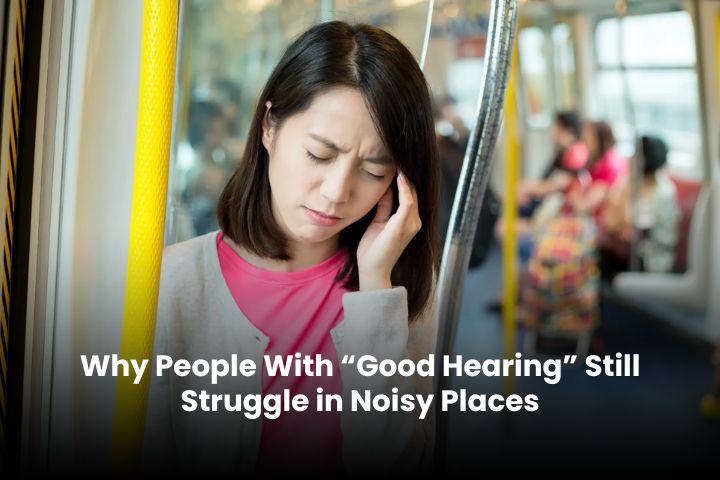
Why People With “Good Hearing” Still Struggle in Noisy Places
Have you ever felt like you can hear perfectly fine in quiet environments, but the moment you step into a crowded restaurant, busy office, family gathering, or traffic-filled street, conversations suddenly become exhausting?
If yes, you’re not alone.
Many people who believe they have “good hearing” still struggle to understand speech in noisy places. This can feel confusing — and sometimes frustrating — because basic hearing tests may appear normal, yet real-life listening feels difficult.
At Eljay Hearing Centre, we frequently meet individuals across Chennai who say:
“I can hear, but I can’t understand when there’s noise.”
This experience is more common than most people realise, and it has very real explanations.
Let’s explore why this happens and what you can do about it.
Hearing vs Understanding: They Are Not the Same Thing
One of the biggest misconceptions about hearing health is that hearing and understanding speech are identical.
They’re not.
Hearing involves detecting sound — the ear picking up vibrations and sending them to the brain.
Understanding involves:
- Processing speech
- Filtering background noise
- Focusing attention
- Interpreting meaning
- Using memory and context
You can technically have “normal hearing” on a basic test but still struggle with speech clarity in noise.
This is sometimes called:
- Hidden hearing loss
- Speech-in-noise difficulty
- Auditory processing difficulty
And it’s far more common than people think.
Why Noisy Places Are Harder — Even With Good Hearing
1. The Brain Has to Filter Competing Sounds
In noisy environments, your brain must:
- Separate voices from background noise
- Focus on one speaker
- Ignore distractions
- Fill in missing words
This process is called auditory processing, and it becomes harder when:
- There’s even mild hearing damage
- The brain is fatigued
- Multiple conversations happen at once
Busy Chennai environments — restaurants, traffic zones, malls, weddings — create exactly this challenge.
2. Early Hearing Loss Often Affects Clarity First
Many people assume hearing loss means “not hearing loud sounds.” But early hearing loss usually affects clarity, not volume.
You may still hear sounds but struggle with:
- Similar-sounding words
- Fast conversations
- Soft voices
- Speech in noise
This is why someone may pass a basic screening but still experience communication difficulty.
A comprehensive speech-in-noise hearing test can reveal issues that routine tests miss.
3. Background Noise Masks Important Speech Sounds
Speech contains high-frequency sounds like:
- S
- F
- T
- K
- SH
These sounds help distinguish words clearly.
Even mild high-frequency hearing loss can make conversations unclear when background noise is present.
You might hear someone speaking — but not understand what they’re saying.
4. Listening Fatigue Is Real
If you feel exhausted after social events or meetings, it may not be social anxiety — it could be listening fatigue.
When hearing isn’t effortless, the brain works harder.
Symptoms include:
- Mental exhaustion after conversations
- Headaches
- Irritability
- Difficulty concentrating
- Needing quiet time afterward
Many professionals in Chennai workplaces experience this without realising hearing strain is the cause.
Hidden Hearing Loss: When Tests Look Normal but Problems Exist
Hidden hearing loss occurs when:
- Inner ear nerve connections are damaged
- Brain processing is affected
- Standard hearing tests don’t detect the issue
Common signs include:
- Difficulty understanding speech in noise
- Asking people to repeat often
- Trouble following group conversations
- Turning TV volume higher than others prefer
- Avoiding crowded places
If this sounds familiar, a detailed evaluation at a specialised hearing clinic in Chennai can help identify the issue.
Age Is Not the Only Factor
Many people assume only older adults struggle in noisy places.
But speech-in-noise difficulty affects:
- Young professionals
- Students
- Frequent headphone users
- People exposed to loud environments
- Individuals with stress or fatigue
- People with mild hearing loss
Urban lifestyles — especially in large cities — increase the risk.
The Chennai Factor: Why Urban Noise Makes Things Worse
Living in Chennai means constant sound exposure:
- Traffic noise
- Construction
- Loud celebrations
- Public transport
- Crowded restaurants
- Office noise
Long-term exposure to noise can cause subtle hearing damage that may not show immediately on basic tests but affects clarity in complex environments.
Regular hearing check-ups become even more important in high-noise cities.
Psychological and Emotional Impact
Struggling to hear in noisy places doesn’t just affect communication — it affects confidence.
People often feel:
- Embarrassed asking for repetition
- Anxious in social settings
- Withdrawn in group conversations
- Misunderstood at work
- Mentally drained
Over time, some individuals begin avoiding social events altogether.
Addressing hearing challenges early can prevent this cycle.
What Helps When You Struggle in Noisy Places?
1. Comprehensive Hearing Evaluation
A detailed hearing test should include:
- Speech-in-noise testing
- Frequency-specific analysis
- Auditory processing evaluation
This provides a more accurate picture than basic screenings.
You can explore hearing assessments here:
👉 https://eljayhearing.com/
Or book a consultation directly:
👉 https://appointment.eljayhearing.com/
2. Modern Hearing Technology (Even for Mild Loss)
Many people think hearing aids are only for severe hearing loss.
But today’s advanced hearing aids:
- Improve speech clarity
- Reduce background noise
- Enhance listening comfort
- Connect via Bluetooth
- Are small and discreet
Even mild hearing loss can benefit significantly.
3. Listening Strategies
Simple adjustments can help:
- Face the speaker directly
- Reduce background noise when possible
- Choose quieter seating in restaurants
- Take listening breaks
- Ask for clarification early
These strategies reduce listening fatigue.
4. Brain and Hearing Training
Auditory training exercises can improve:
- Speech recognition
- Focus in noise
- Listening stamina
The brain can adapt — especially when intervention happens early.
When Should You Get Your Hearing Checked?
Consider a hearing evaluation if you:
- Hear well in quiet but struggle in noise
- Ask people to repeat often
- Feel tired after conversations
- Avoid crowded environments
- Notice ringing in your ears (tinnitus)
- Turn TV volume higher than others
Early diagnosis leads to better outcomes.
8 branches across Chennai: Or visit your nearest Eljay Hearing Centre in:
- Purasawalkam (Head Office): A1, 1st Floor, Garden Apartments, No.68, Purasawalkam High Road, Chennai – 600007
- Adyar: No.75, Dhanalakshmi Ave, near Nalli Silks, Kasturba Nagar, Chennai – 600020
- Alwarpet: G-2, Sir Usman Court, No.63, Eldams Road, Opp. Punjab National Bank, Chennai – 600018
- Ambattur: No.426/469, MM Tower, MTH Road, Opp. Rakki Cinemas, Behind Axis Bank, Chennai – 600053
- Nanganallur: No.14, 2nd Main Road, Ram Nagar, Near Anjaneyar Temple, Opp. Sidney Hospital, Chennai – 600061
- Tambaram (West): No.21, Duraisamy Reddy Street, Next to Passport Office, Chennai – 600045
- Velachery: No.26/15, Sai Ram Complex, 100-ft Road, next to Dr. Batra’s, Vijaya Nagar, Chennai – 600042
- Tondiarpet: No.71, O.No, 15/1, Kummalamman Koil St, opp. to KVT Maaligai, Sanjeevarayanpet, Tondiarpet, Chennai, Tamil Nadu 600081
 Book a consultation today: appointment.eljayhearing.com
Expert care is always within reach, wherever you are in Chennai.
👉 Book an appointment: https://appointment.eljayhearing.com/
🌐 Learn more: https://eljayhearing.com/
Hearing Clearly Should Feel Effortless
Hearing is not just about detecting sound — it’s about connection, confidence, and comfort.
If noisy places feel overwhelming despite “good hearing,” your experience is valid. There may be underlying factors that a specialised assessment can identify and improve.
At Eljay Hearing Centre, the goal is not just better hearing — it’s easier listening and better quality of life.
Because you deserve conversations that feel natural, not exhausting.