
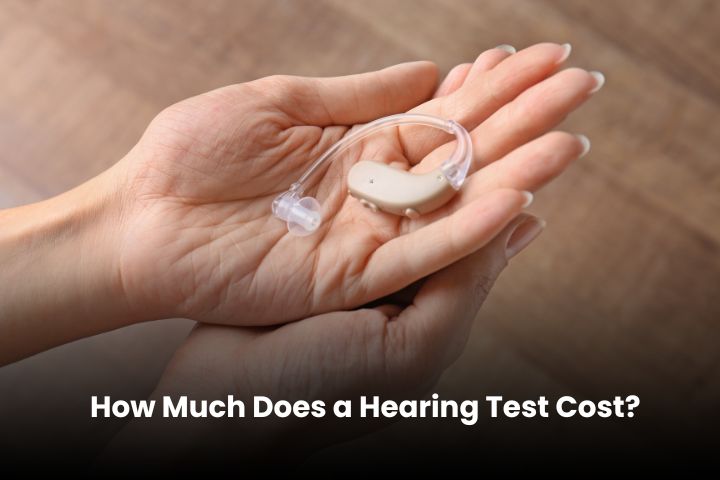
How Much Does a Hearing Test Cost?
If you’ve been searching “how much does a hearing test cost?”, you may have noticed that there isn’t always one straightforward answer.
The cost of a hearing test can vary depending on the type of test you need, your age, the reason for the evaluation, and the clinic where the assessment is performed.
A basic hearing screening may be relatively simple, while a comprehensive hearing evaluation can involve several different tests to understand exactly how well you hear and whether there is an underlying hearing problem.
For someone experiencing muffled hearing, difficulty understanding conversations, ringing in the ears, frequently asking people to repeat themselves, or increasing the volume of the TV, getting a hearing test can be an important first step.
In this guide, we’ll explain what affects the hearing test cost in Chennai, the different types of hearing tests you may come across, what happens during an evaluation, and when it may be worth getting your hearing checked.
What Is a Hearing Test?
A hearing test is an assessment performed by an audiologist to understand how well you can hear different sounds and frequencies.
Depending on your symptoms and age, an audiologist may recommend one or more tests rather than relying on a single measurement.
A hearing evaluation can help identify:
- Whether hearing loss is present
- The degree of hearing loss
- Whether the hearing loss affects one or both ears
- Which frequencies are affected
- Whether the hearing loss may be conductive, sensorineural or mixed
- How well you understand speech
- Whether further medical evaluation may be required
This is why the cost of a hearing test can differ from person to person.
A person coming in for a quick screening may need a different assessment from someone experiencing sudden hearing changes or someone being evaluated for hearing aids.
How Much Does a Hearing Test Cost in Chennai?
There is no single price that applies to every hearing test in Chennai.
The final cost depends largely on the type and number of tests required.
Some of the common factors include:
1. Type of hearing test
A basic hearing screening is different from a comprehensive diagnostic hearing evaluation.
Tests such as Pure Tone Audiometry (PTA), speech audiometry, tympanometry and other specialised assessments may have different charges.
2. Age of the person
Children may require specialised hearing assessments because standard adult testing methods may not always be suitable.
A child’s evaluation may involve age-appropriate behavioural or objective testing depending on their age and ability to respond.
3. Symptoms and medical history
Someone with a straightforward concern may only need a basic assessment.
However, symptoms such as tinnitus, dizziness, sudden hearing changes, recurrent ear infections or hearing loss in one ear may require a more detailed evaluation.
4. Diagnostic equipment
Different hearing tests require different equipment and expertise.
A comprehensive evaluation may therefore cost more than a basic screening.
5. Clinic and location
Hearing test charges can also vary between clinics and locations based on the services and facilities available.
Rather than choosing a hearing test based solely on price, it is important to understand what the assessment includes.
What Are the Different Types of Hearing Tests?
When people search for “hearing test price in Chennai,” they may actually be referring to several different tests.
Here are some of the most common ones.
1. Pure Tone Audiometry
Pure Tone Audiometry, often called PTA, is one of the most commonly used hearing tests for adults and older children.
You typically wear headphones or earphones and respond when you hear sounds at different pitches and volumes.
The results help the audiologist determine the softest sounds you can hear across different frequencies.
PTA can help determine:
- Whether hearing loss is present
- The degree of hearing loss
- Which frequencies are affected
- Whether the hearing loss is similar in both ears
If you’re specifically searching for “pure tone audiometry cost,” keep in mind that PTA may be only one part of a broader hearing evaluation.
2. Speech Audiometry
Hearing isn’t only about detecting sounds.
You also need to understand speech.
Speech audiometry assesses how well you can hear and understand spoken words at different volume levels.
This can be particularly useful when someone says:
“I can hear people talking, but I can’t understand what they’re saying.”
This distinction is important because someone may detect sound but still have difficulty understanding speech, particularly in noisy environments.
3. Tympanometry
Tympanometry looks at how the eardrum and middle ear are functioning.
It can help identify problems such as:
- Fluid in the middle ear
- Eustachian tube dysfunction
- Middle-ear problems
- Abnormal eardrum movement
- Certain types of conductive hearing loss
It is different from a standard hearing test because it assesses the mechanical function of the middle ear rather than simply measuring how softly you can hear sounds.
4. Hearing Tests for Children
Children may need different forms of hearing assessment depending on their age and developmental stage.
Hearing tests may be recommended when there are concerns about:
- Delayed speech or language development
- Difficulty following instructions
- Poor response to sounds
- Frequent ear infections
- Difficulty at school
- Suspected hearing loss
Early identification can be particularly important because hearing plays a major role in speech, language and learning.
Is a Hearing Screening the Same as a Hearing Test?
Not necessarily.
The terms hearing screening and hearing evaluation are sometimes used interchangeably, but they can serve different purposes.
A screening is generally intended to identify whether there may be a potential hearing problem.
A diagnostic hearing evaluation goes further and helps determine the type and degree of hearing loss.
For example, if a screening indicates that your hearing may not be within the expected range, an audiologist may recommend a more comprehensive assessment.
So when comparing hearing test prices, always ask:
“What exactly is included in the test?”
The cheapest option may not necessarily provide the information you actually need.
What Happens During a Hearing Test?
If you’ve never had a hearing test before, there is usually nothing to be nervous about.
Your audiologist may begin by asking about your hearing concerns and medical history.
You may be asked questions such as:
- When did you first notice difficulty hearing?
- Is the problem in one ear or both?
- Do you experience ringing or buzzing?
- Do you struggle to hear in noisy places?
- Have you had frequent ear infections?
- Are you exposed to loud sounds regularly?
- Do you have difficulty following conversations?
Depending on your symptoms, the audiologist may then conduct one or more hearing tests.
The entire process is generally straightforward and non-invasive.
Once the assessment is complete, the audiologist can explain your results and discuss the appropriate next steps.
Do You Need a Hearing Test If You Can Still Hear?
Yes.
One of the biggest misconceptions about hearing loss is that you would immediately know if you had it.
Hearing loss can develop gradually.
You may still hear sounds but struggle with clarity, particularly when several people are talking or when there is background noise.
Some early signs include:
- Asking people to repeat themselves
- Increasing TV or phone volume
- Difficulty following conversations in restaurants
- Struggling to hear someone speaking from another room
- Feeling that people mumble
- Avoiding group conversations
- Frequently saying “what?” or “sorry?”
- Ringing or buzzing in the ears
If these situations sound familiar, a hearing evaluation can help determine whether hearing loss is contributing to the problem.
How Often Should You Get a Hearing Test?
There isn’t one schedule that applies to everyone.
Your audiologist may recommend testing based on your age, symptoms, medical history and exposure to loud sounds.
You may want to consider getting your hearing checked if you:
- Notice a change in your hearing
- Have persistent tinnitus
- Work around loud machinery
- Regularly use headphones at high volumes
- Have recurring ear infections
- Have a family history of hearing problems
- Are experiencing difficulty understanding conversations
- Have been told that you don’t respond when someone speaks to you
A hearing test can also establish a baseline, making it easier to identify changes in your hearing over time.
Can a Hearing Test Detect the Cause of Hearing Loss?
A hearing test can provide valuable information about the type and degree of hearing loss, but it may not always identify the complete underlying medical cause on its own.
For example, hearing loss can be associated with:
- Age-related changes
- Prolonged exposure to loud noise
- Earwax blockage
- Ear infections
- Problems affecting the middle ear
- Inner-ear conditions
- Certain medications
- Sudden changes in hearing
Depending on your results and symptoms, your audiologist may recommend further evaluation by an ENT or other medical professional.
What If You Need Hearing Aids After the Test?
A hearing test does not automatically mean you need hearing aids.
The purpose of the assessment is first to understand your hearing.
If hearing loss is identified and hearing aids are appropriate, your audiologist can discuss the available options based on your hearing profile, lifestyle and communication needs.
Modern hearing aids are available in different styles and technologies from brands such as Phonak, Signia, Widex and ReSound.
The right hearing aid isn’t necessarily the most expensive one. The important consideration is whether the technology and programming are suitable for your specific hearing needs.
A professional hearing evaluation is therefore an important step before choosing a hearing aid.
Why You Shouldn’t Choose a Hearing Test Based Only on Price
Price is naturally an important consideration.
However, when comparing hearing test costs, it is worth looking beyond the number.
Consider:
What tests are included?
A comprehensive evaluation may involve multiple assessments.
Who is conducting the test?
The experience and expertise of the audiologist matter.
Will the results be explained to you?
Understanding your results is just as important as obtaining them.
Can you receive follow-up guidance?
Depending on the findings, you may need additional testing, monitoring or hearing care.
A hearing test should ultimately give you a clearer understanding of your hearing—not simply a test report.
Where Can You Get a Hearing Test in Chennai?
If you’re looking for a hearing test in Chennai, Eljay Hearing Centre provides hearing evaluations and hearing care across 8 centres in Chennai, backed by 50 years of experience.
Hearing assessments are available for both adults and children, with further hearing care provided based on individual needs.
You can visit the centre closest to you for a professional hearing evaluation and discuss your symptoms with an audiologist.
Book a Hearing Test / Appointment
You can also learn more about Eljay’s hearing care services here:
Frequently Asked Questions
How much does a hearing test cost in Chennai?
The cost varies depending on the type of hearing test or evaluation required. A basic screening may differ in price from a comprehensive diagnostic assessment involving multiple tests.
What is the cost of a Pure Tone Audiometry test?
PTA costs can vary between clinics. It is best to confirm the current charge with the hearing centre and ask whether the quoted price includes any additional assessments.
Is a hearing test painful?
No. Standard hearing tests are generally non-invasive and painless.
How long does a hearing test take?
The duration depends on the type of assessment and whether multiple tests are required. A comprehensive evaluation can take longer than a basic screening.
Can children have a hearing test?
Yes. Children can undergo hearing assessments, although the testing method may vary depending on their age and ability to respond.
Do I need a hearing test before buying hearing aids?
A professional hearing evaluation is strongly recommended before selecting hearing aids. The results help an audiologist understand your hearing profile and determine what type of hearing solution may be suitable.
Can I get a hearing test even if I don’t think I have hearing loss?
Yes. A hearing test can establish a baseline and identify changes that may not yet be obvious in everyday situations.
At Eljay Hearing Centre, we provide advanced hearing aids from:
8 branches across Chennai: Or visit your nearest Eljay Hearing Centre in:
- Purasawalkam (Head Office): A1, 1st Floor, Garden Apartments, No.68, Purasawalkam High Road, Chennai – 600007
- Adyar: No.75, Dhanalakshmi Ave, near Nalli Silks, Kasturba Nagar, Chennai – 600020
- Alwarpet:Flat no 1 ,Ground Floor Alamelu Enclave, No 1, Abhiramapuram 4th street, Chennai 600018
- Ambattur: No.426/469, MM Tower, MTH Road, Opp. Rakki Cinemas, Behind Axis Bank, Chennai – 600053
- Nanganallur: No.14, 2nd Main Road, Ram Nagar, Near Anjaneyar Temple, Opp. Sidney Hospital, Chennai – 600061
- Tambaram (West): No.21, Duraisamy Reddy Street, Next to Passport Office, Chennai – 600045
- Velachery: No.26/15, Sai Ram Complex, 100-ft Road, next to Dr. Batra’s, Vijaya Nagar, Chennai – 600042
- Tondiarpet: No.71, O.No, 15/1, Kummalamman Koil St, opp. to KVT Maaligai, Sanjeevarayanpet, Tondiarpet, Chennai, Tamil Nadu 600081
 Book a consultation today: appointment.eljayhearing.com
Expert care is always within reach, wherever you are in Chennai.
👉 Book an appointment: https://appointment.eljayhearing.com/
🌐 Learn more: https://eljayhearing.com/
Final Thoughts
Searching for “how much does a hearing test cost?” is a good starting point—but the price shouldn’t be the only thing you consider.
The type of hearing test, your symptoms, the expertise of the audiologist and the scope of the evaluation can all affect the cost.
More importantly, a hearing test can give you something more valuable than a number: a clearer understanding of your hearing health.
If you’ve noticed changes in your hearing, difficulty understanding conversations or persistent ringing in your ears, don’t wait until communication becomes difficult.
Get your hearing checked, understand your results and take the next step based on what your hearing actually needs.